
How to Measure Steel Track Chains for Excavators & Dozers
Steel track chains are the largest single wear item on a tracked construction machine. When you specify a replacement chain you have to get five measurements right — and you have to know whether the chain is sealed and lubricated (SALT), greased, or dry. This guide walks through every measurement and the wear thresholds that tell you when a chain is finished.
The five measurements that define a steel track chain
A steel track chain is defined by:
- Pitch — centre-to-centre distance between adjacent track pin bores.
- Bushing OD — outside diameter of the track bushing (this is the surface that actually rides on the sprocket teeth, so it wears first).
- Pin diameter — diameter of the track pin.
- Chain link height (sometimes called rail height) — the height of the link from base to wear surface.
- Number of shoes / links — the total number of track shoes and inner link assemblies in a full loop.
Steel Track Chain Measuring Diagram
The diagram below shows where on the chain each measurement is taken, and includes a blank table you can use to record the readings during inspection on a job sheet.
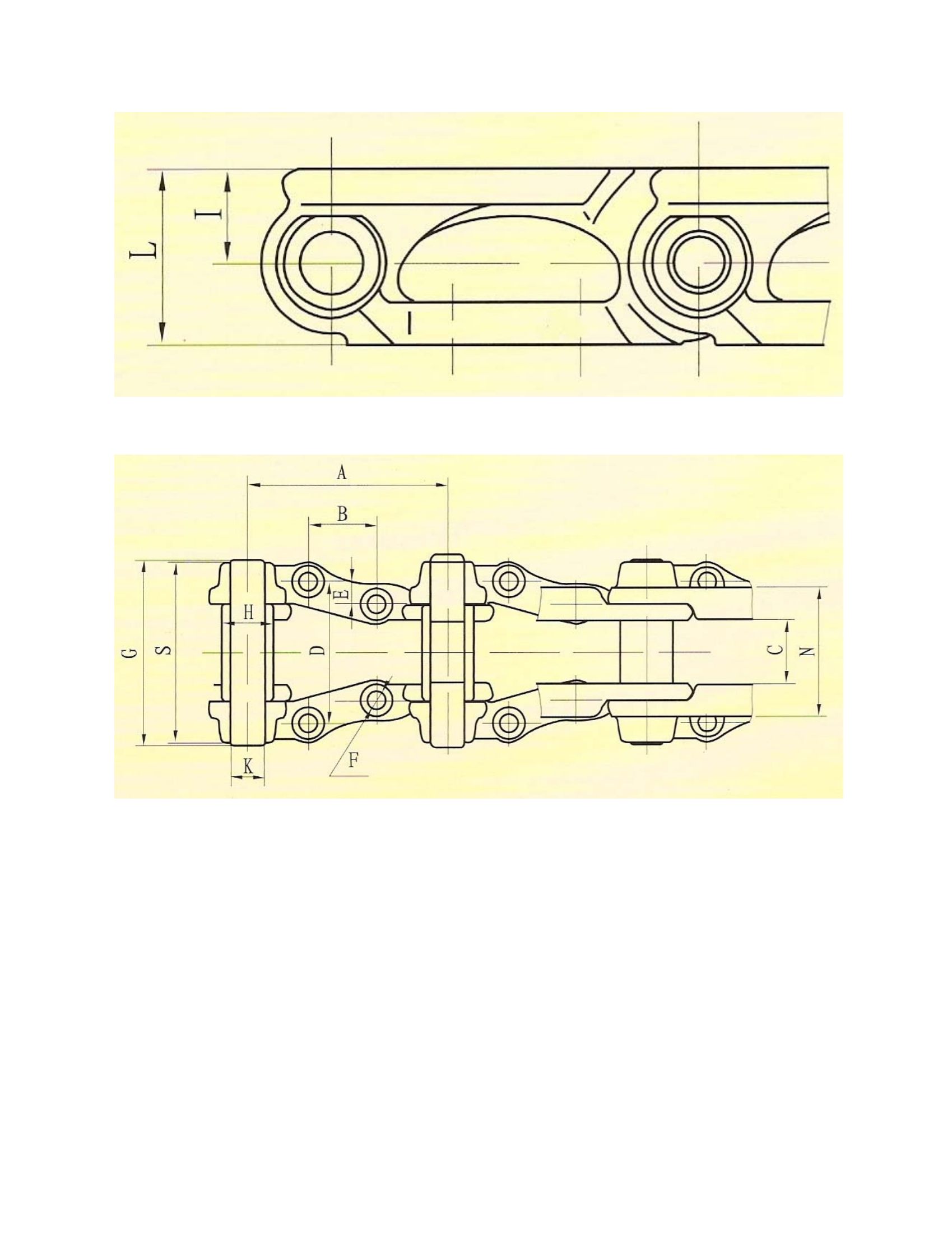
Where to take each measurement
| Measurement | Tool | Where on the chain |
|---|---|---|
| Pitch | Steel rule or tape | Between centres of two adjacent pin bores on a flat section of chain |
| Bushing OD | Vernier callipers | Across the outside of an unworn bushing (a bushing under the carrier rollers, not at the sprocket) |
| Pin diameter | Micrometer | At the unworn portion of the pin protruding past the link |
| Link height | Vernier callipers or depth gauge | From the base of the link to the wear surface, on a link not yet over the idler |
| Shoes / links | Count | Walk the full loop of the chain |
Take pitch measurements over multiple links and average — pitch elongates with wear, but unevenly. A chain with average pitch elongation greater than 3% of nominal is at the end of its serviceable life.
Sealed & lubricated vs dry & greased chains
There are two main internal designs:
- Sealed and Lubricated Track (SALT) — pins and bushings run in oil, with duo-cone seals at each end. SALT chains last significantly longer than dry chains and are the OEM standard on modern excavators and dozers. SALT chains can only be repaired with the correct service press, not a standard track press.
- Dry / greased track — pins and bushings run dry or with grease packed between them. Cheaper, but wears faster. Can be split, repaired and re-pinned in a normal workshop with a track press.
When ordering a replacement chain, always specify which type the machine came with — fitting a dry chain to a SALT undercarriage will reduce its service life by half or more.
Wear thresholds — when to replace
Replace a steel track chain when any one of the following is true:
- Bushing OD has worn down by more than 30% of original diameter.
- Pitch has elongated by more than 3% of original (e.g. a 190 mm pitch chain is at end-of-life at 195.7 mm average).
- Link height is below 50% of original.
- The bushing has worn through to the inner pin in any one bay.
- Multiple cracks are visible at the link weld zones.
- The track is "ridden up" on the sprocket — a clear sign of chain stretch.
Once the chain is at end-of-life it will rapidly damage the sprocket, idlers and rollers, so plan replacement to coincide with a sprocket change.
Compatible machines
Steel track chains are used across the construction industry on medium-to-large excavators and dozers:
- Caterpillar — 3xx midi and large excavators, D-series dozers
- Komatsu — PC midi/large excavators, D-series dozers
- JCB — JS and JZ excavators
- Hitachi Construction Machinery — ZX excavators
- Volvo Construction Equipment — EC excavators
- Doosan — DX excavators
- Liebherr — R-series excavators
Related undercarriage guides
- Excavator Sprocket Guide
- How to Measure Rubber Tracks (mini excavators)
- Track Tensioner Guide (rubber and steel)
- Excavator Pin & Bush Diagram
Need help specifying a steel track chain?
Send us a clear photo of the side of the chain plus your machine make, model and serial number. We supply OEM and quality aftermarket steel track chains for all major UK construction brands.
Contact us for a quote, or call 01255 323202 to speak to one of our parts team.