
Fork Identification Sheet — UK Construction Telehandlers & Forklifts
Pallet forks look interchangeable until you try to fit one to the wrong carriage. Forks are classified by carriage class, hook width, tine pitch and tine dimensions — and a Class III fork will not hang on a Class II carriage. This guide is the UK construction trade identification sheet covering every common fork pattern, dimension table and ITA carriage class used on telehandlers, wheel loaders and counter-balance forklifts.
How to identify a fork
There are four numbers you need before ordering a replacement fork:
- Carriage class — ITA Class I, II, III, IV or V (sets the carriage bar height the fork hooks onto).
- Tine length — measured from the front face of the heel to the tip, in millimetres or inches.
- Tine width and thickness — usually expressed as
width × thickness, e.g.100 × 40 mm. - Hook style — pin-type hook, ITA-class shaft hook, or proprietary manufacturer pattern (Manitou, Merlo, JCB Q-fit etc.).
Fork Identification Sheets — full diagrams
The 10-page identification sheet below covers ITA Class I to V forks and the common UK construction fork patterns. Each page includes the carriage dimensions, tine reference and matching attachment.
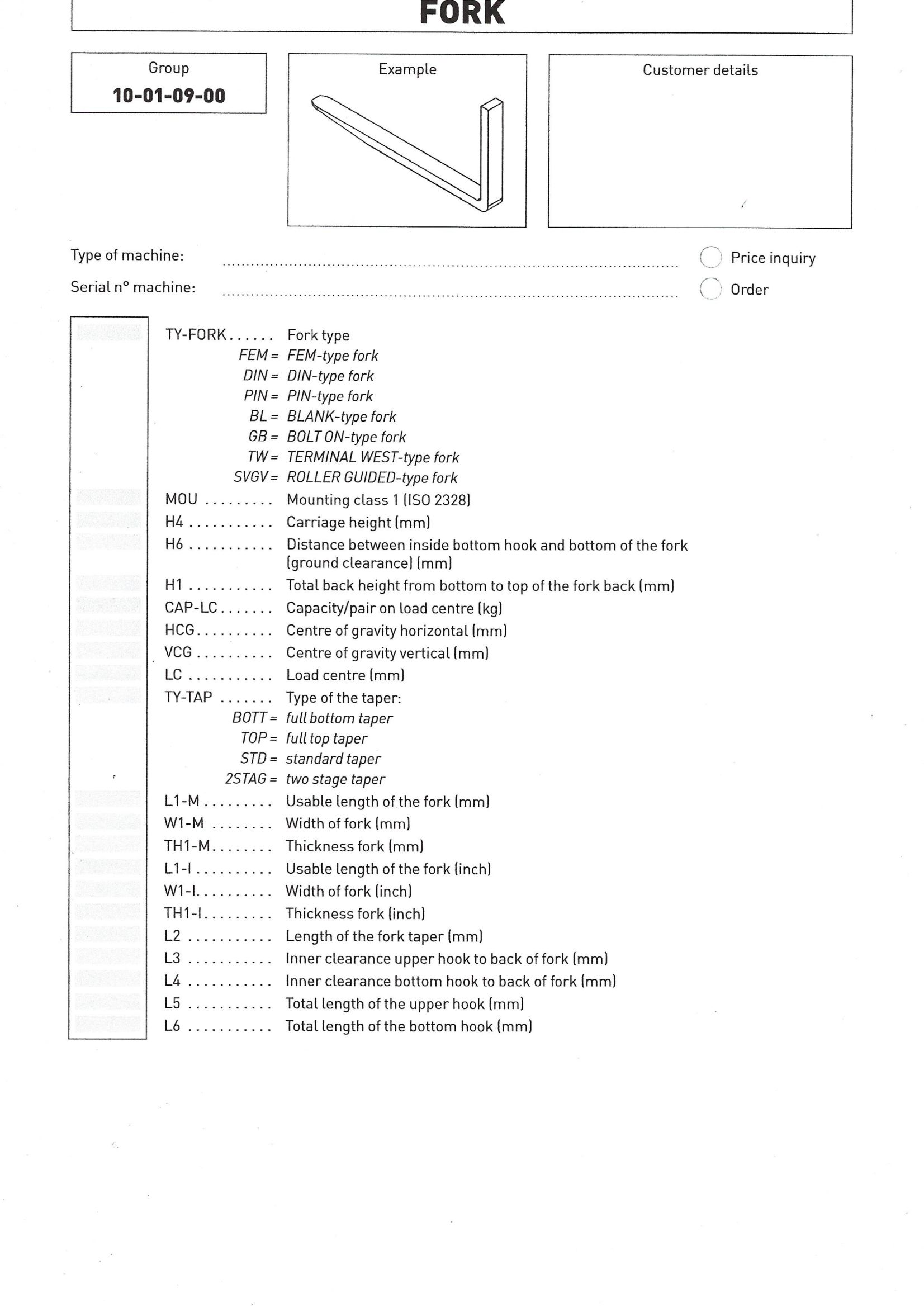
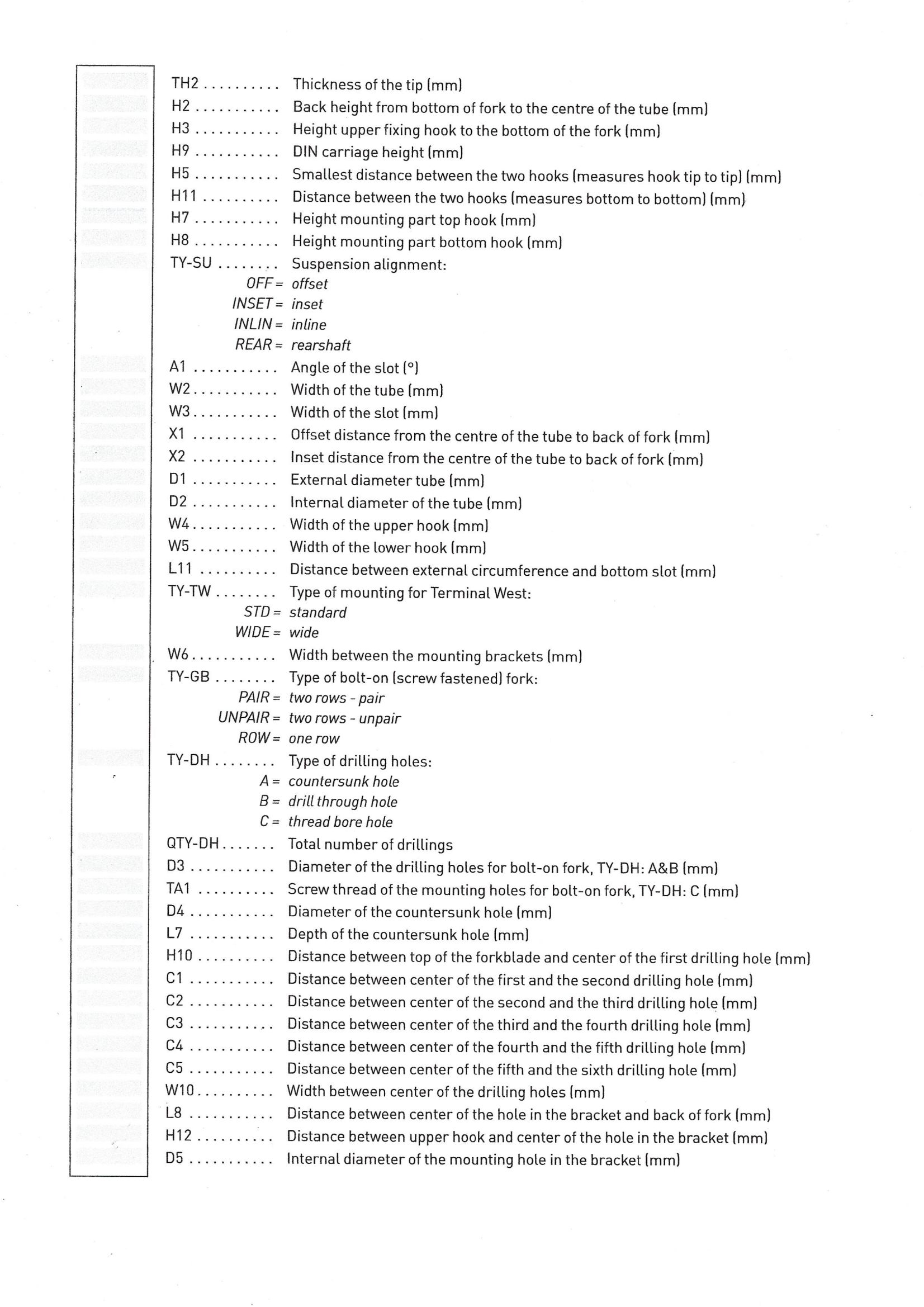
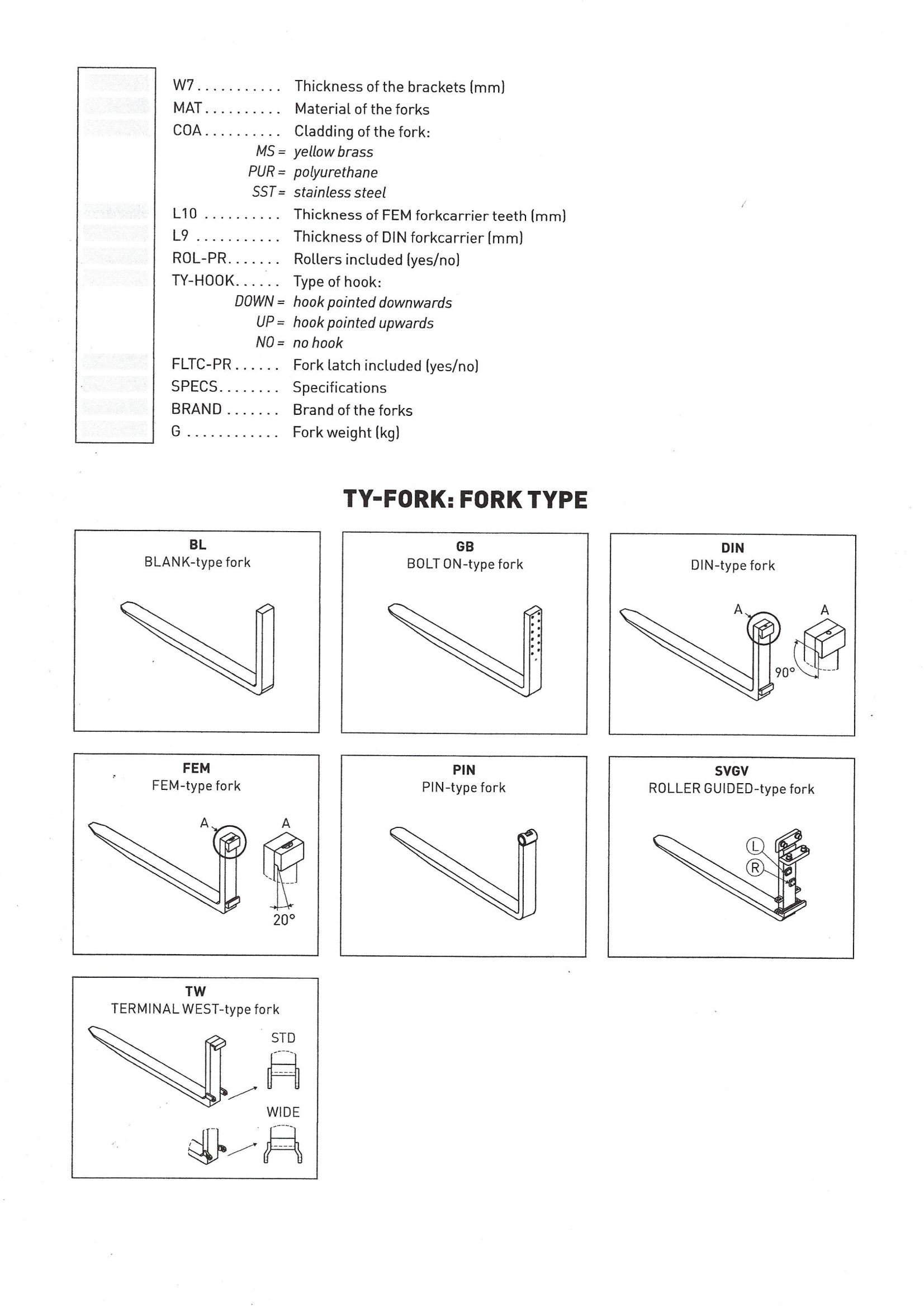
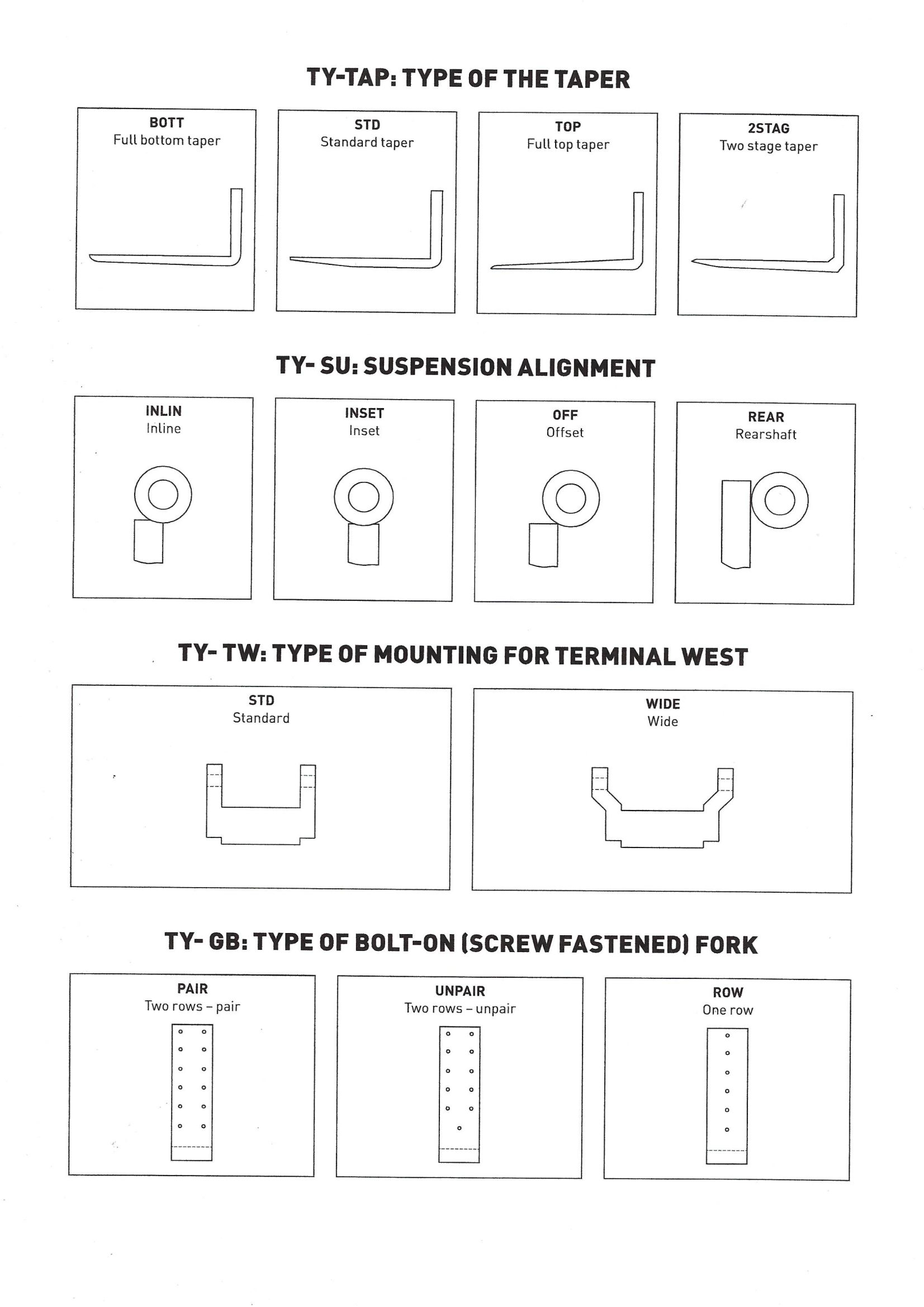
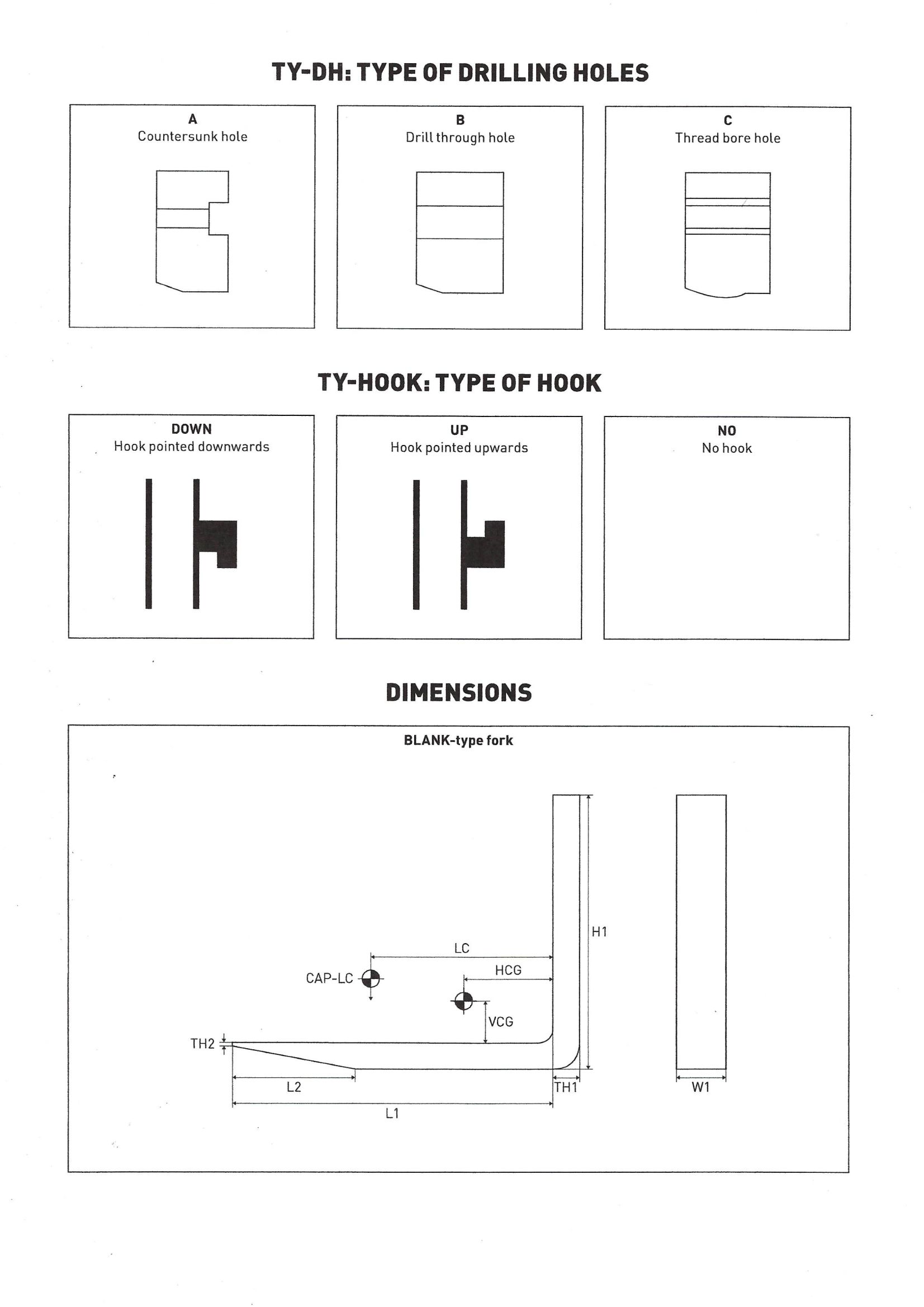
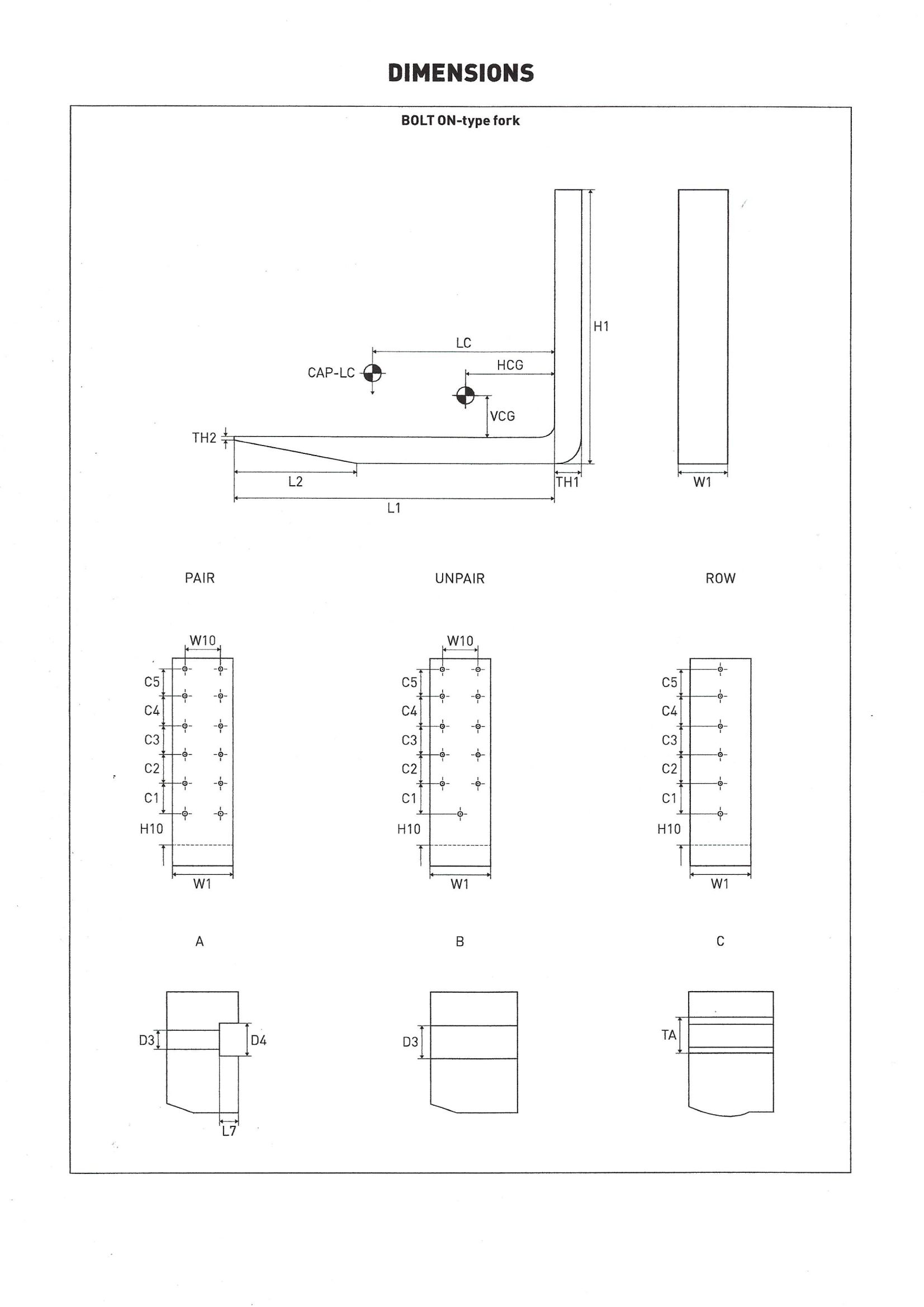
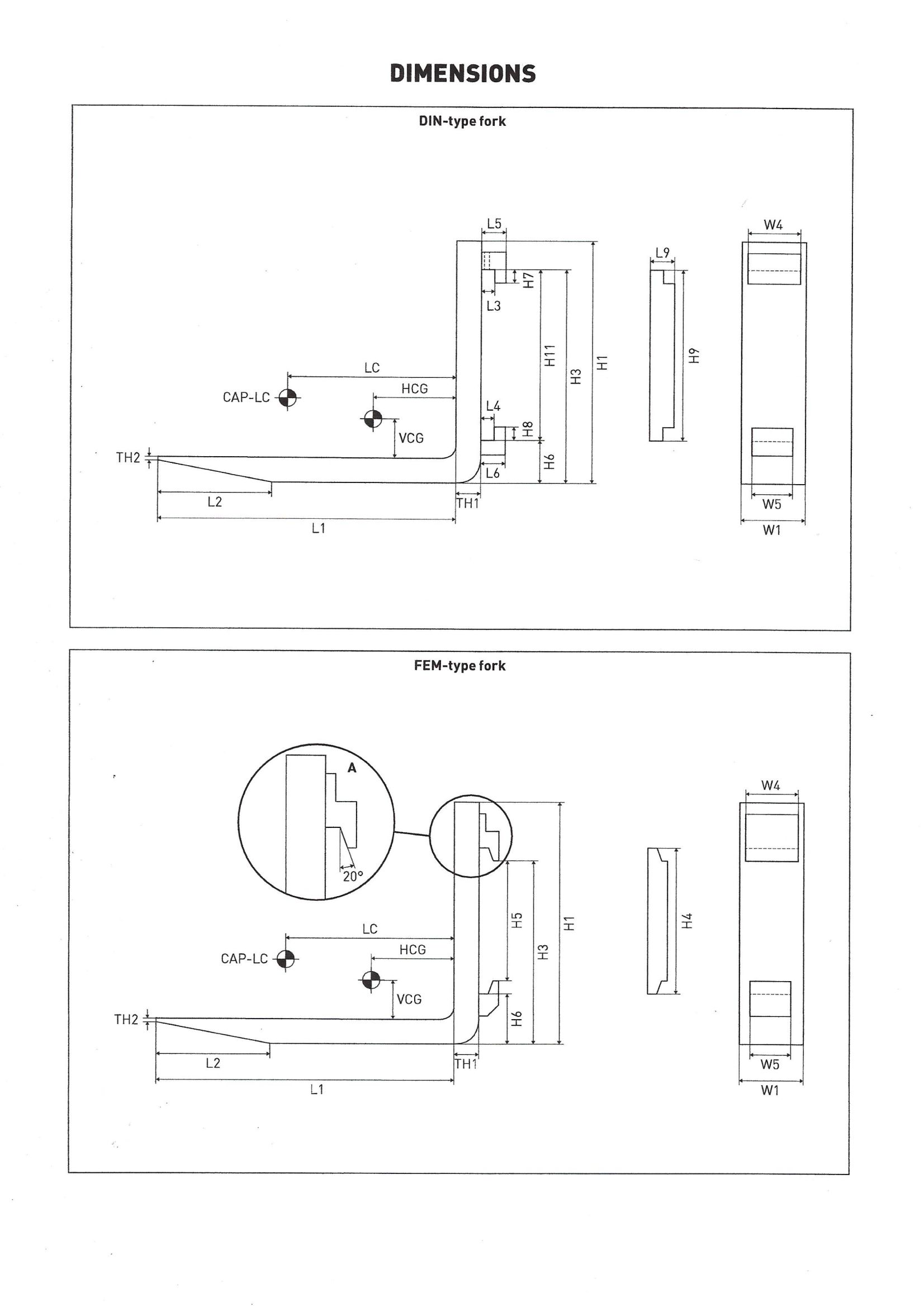
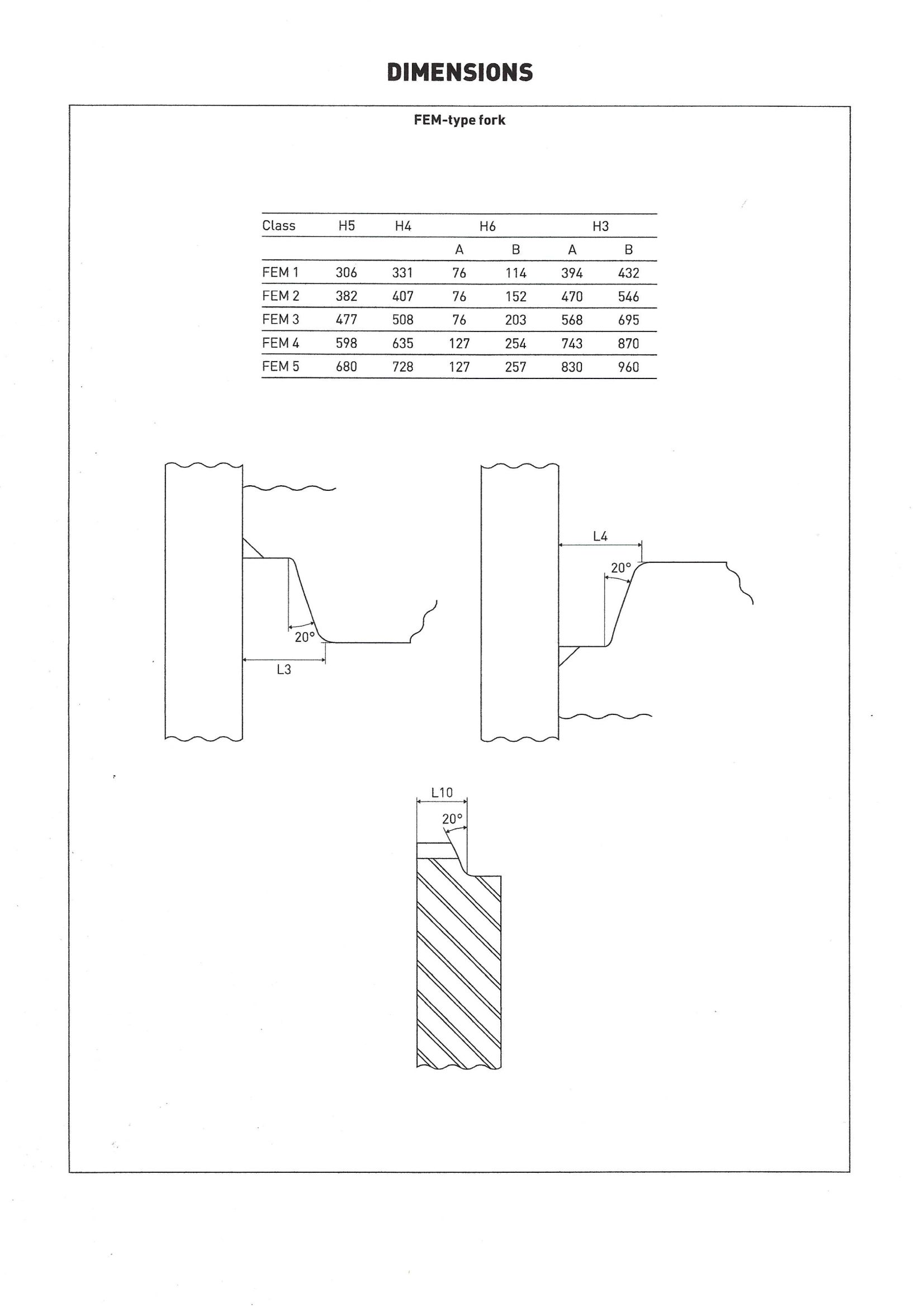
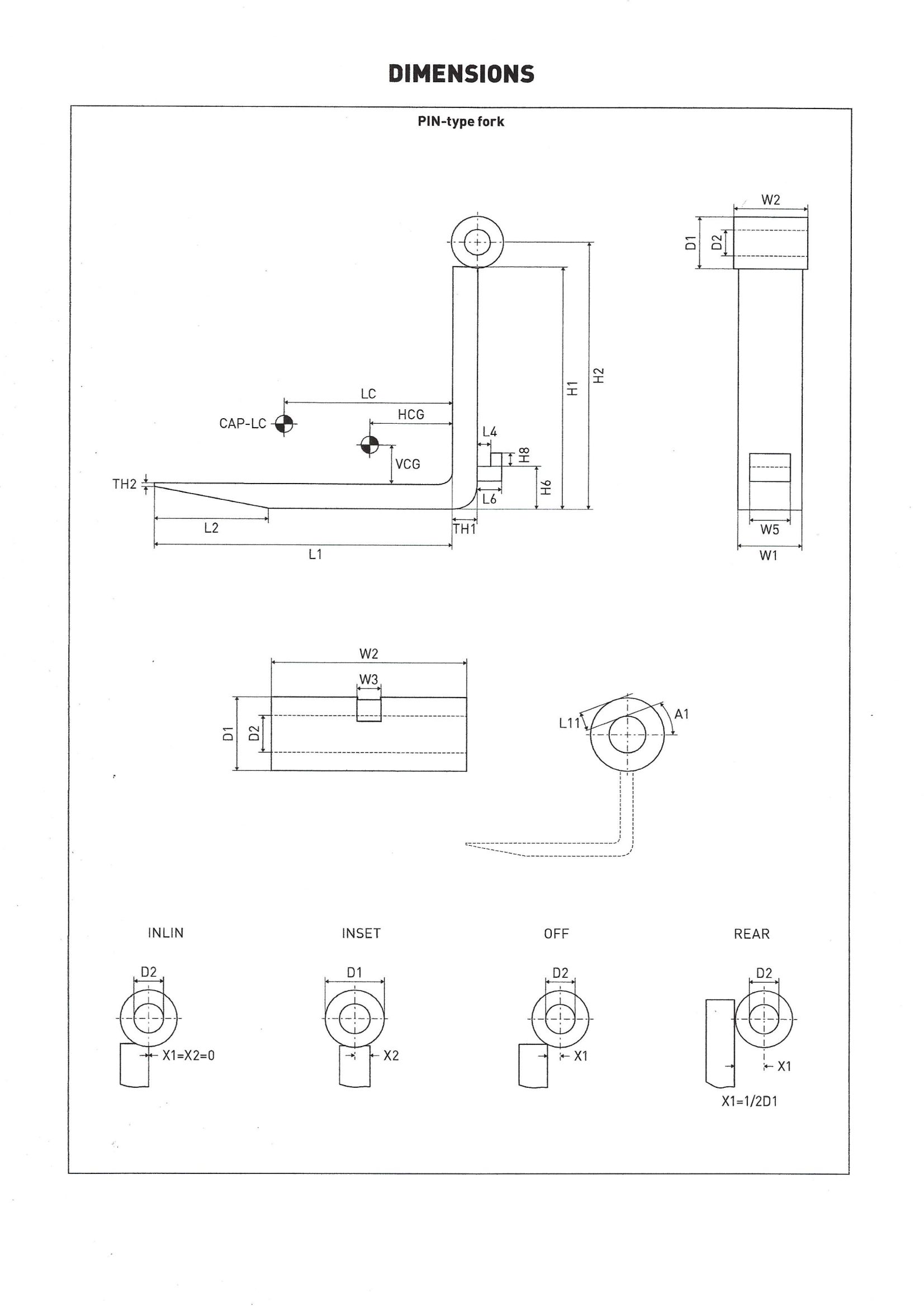
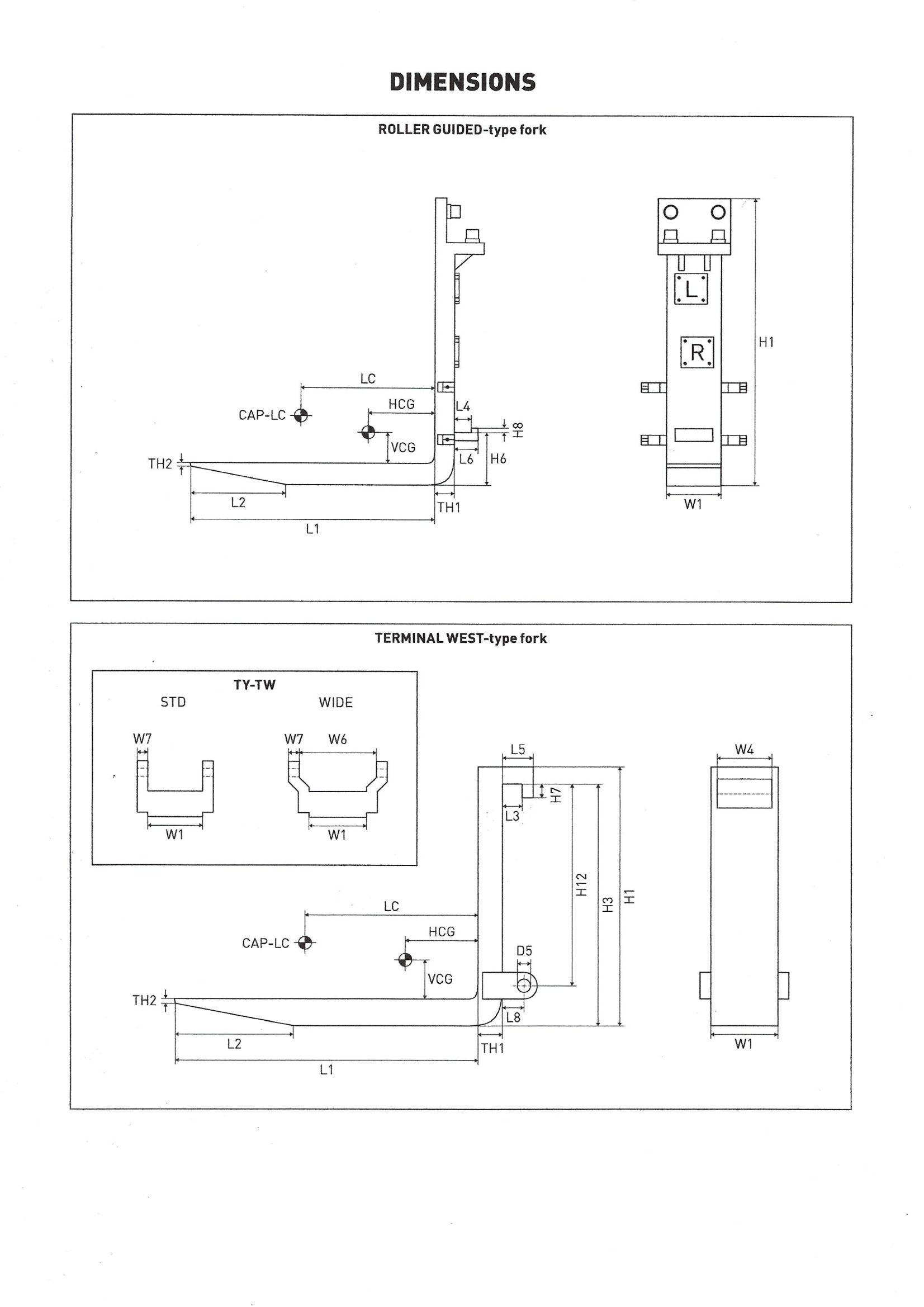
ITA carriage class — quick reference
| Class | Carriage bar height (mm) | Typical capacity | Common fitment |
|---|---|---|---|
| I | 305 | up to 2,500 kg | small counter-balance forklifts |
| II | 381 | 2,500 – 5,500 kg | standard counter-balance forklifts |
| III | 476 | 5,500 – 10,900 kg | large counter-balance, smaller telehandlers |
| IV | 597 | 10,900 – 17,200 kg | heavy industrial forklifts, large telehandlers |
| V | 729 | 17,200+ kg | port equipment and very large machines |
Telehandlers — JCB Q-fit, Manitou MLT carriage, Merlo Tac-Lock and Caterpillar TH carriages — use proprietary attachment systems rather than ITA classes. These are not interchangeable between brands without an adapter plate.
Tine length — what to ask for
Tine length is measured from the front face of the heel to the tip. Common construction telehandler lengths in the UK are:
- 1,200 mm — light pallet work, garden centres
- 1,500 mm — most general construction, double-stacked pallets
- 1,800 mm — bulk-bag handling, longer pallets
- 2,400 mm — block-and-beam, kit-built houses
Capacity de-rates with tine length — a fork rated 2,500 kg at 600 mm load centre will be rated lower at 1,200 mm load centre. Always check the load chart on the carriage data plate.
Compatible machines
Fork patterns covered by this sheet include attachments for:
- JCB — Loadall Q-fit, JCB pin, JCB compact telehandler carriage
- Manitou — MLT, MT, MHT carriage patterns
- Merlo — Panoramic, Turbofarmer, Multifarmer Tac-Lock
- Caterpillar — TH series telehandlers
- New Holland — LM series telehandlers
- Massey Ferguson — agri telehandlers
- Bobcat — TL series telehandlers
- Volvo Construction Equipment — wheel loader fork carriages
For a full inventory of telehandler systems each fork attaches to, see our Telehandler Parts Guide.
Need help identifying or sourcing forks?
Send us a side-on photo of the fork hook plus the make and model of the machine, and we will identify the correct carriage class and pattern. We supply OEM and quality aftermarket forks, fork extensions and bespoke attachments.
Contact us for a quote, or call 01255 323202 to speak to one of our parts team.